Last chance to visit the exhibitions at Kroměříž Castle
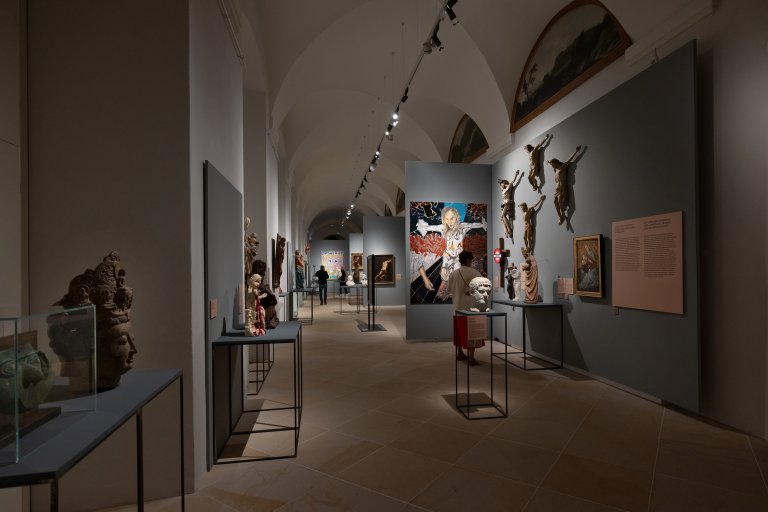
The human figure is one of the most common motifs in the history of art, but it is also an important means through which art reflects how different eras understood human beings and their place in the world. It was not merely a matter of capturing outward appearance. The human body embodies a range of meanings and opens up space for aesthetic, cultural, and psychological perceptions. Every depiction of the human body bears not only the imprint of the era in which it was created, but also the ideas, values, and questions that shaped that society. It is therefore impossible to understand images of the human body in a single, definitive way. Every era, every culture, and every viewer can discover new and different meanings in them.
Giovanni Battista Pittoni
Thanks to the “A Glimpse into the Storage” exhibition, visitors can view Pittoni’s 1735 painting The Handing Over of the Keys to Peter, which was generously donated last year to the Olomouc Museum of Art by Helena Neumannová, daughter of the prominent Czech art historian Jaromír Neumann (1924–2001). The painting is a typical work by Pittoni, in which he fully embraced the Rococo style of Venetian painting from the first half of the 18th century. The colorful planes, almost devoid of chiaroscuro transitions, divide the space through drapery that seems to serve to more clearly distinguish the individual figures. This mini-exhibition offers a comparison of the original work with a later copy, which, while not matching Pittoni’s artistic quality, provides a remarkable insight into how contemporary copyists and followers perceived the original.
The Archbishop’s Castle in Kroměříž is open in September from Tuesday through Sunday from 9:30 a.m. to 5:00 p.m.
Translated with www.DeepL.com/Translator (free version)