The Nobility and the Clergy
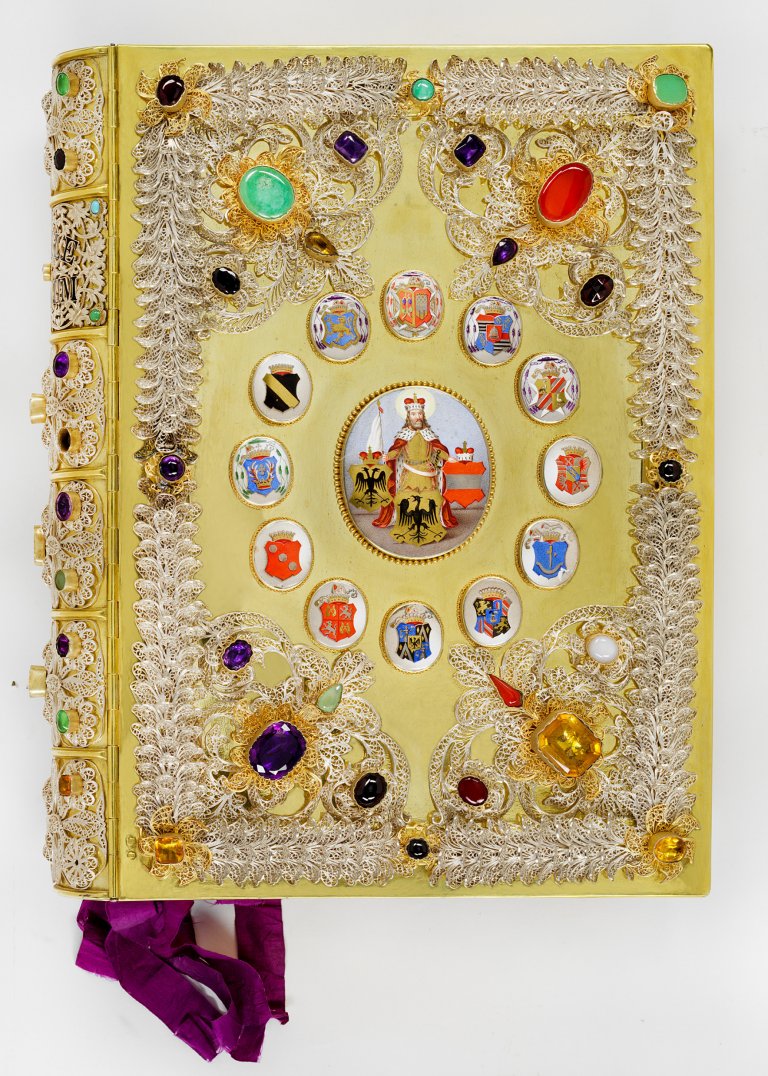
As early as the early Middle Ages, choirs of clerics—canons—began to form at cathedral churches. Their task was to ensure continuous prayer in the cathedral choir, to oversee the solemn conduct of church services, and to assist the bishop in the administration of the diocese. This role was soon taken over by the Olomouc Chapter, which is one of the oldest ecclesiastical institutions in Moravia. It was likely founded immediately after the restoration of the Moravian bishopric in 1063, but its verifiable origins are linked to Bishop Jindřich Zdík and the relocation of the bishop’s seat and the chapter’s seat in 1141 to the newly completed Church of St. Wenceslas. Zdík’s goal was a reformed chapter of twelve canons who, like the twelve apostles of Christ, were to practice vita communis, that is, communal life. This ideal, however, did not survive its founder. Under Bishop Robert, the chapter also obtained the right to freely elect a bishop, a right it was last able to exercise (albeit in a limited form) in 1916.
As an independent institution, the chapter was governed by its own bylaws, known as statutes, which were based on general chapter rules but had been amended and supplemented several times over the course of history. The statutes were also considered an internal matter of the chapter and, as such, were strictly guarded. Only the canons themselves were permitted to know them.
Exhibition Information
- EXHIBITION: The Nobility and the Clergy. 200 Years Since the Establishment of the Noble Status of the Canons of the Olomouc Metropolitan Chapter
- LOCATION: St. Wenceslas Cathedral, crypt
- DATES: May 29, 2026 – September 13, 2026
- AUTHORS AND CURATORS: Jitka Jonová, Helena Zápalková
- CONSERVATION PREPARATION: Ondřej Žák
- GRAPHIC DESIGN: Martin Fišr
- TECHNICAL COOPERATION: Antonín Kučera
opening hours
- JUNE
- Saturday, 10:00 a.m.–1:00 p.m. and 2:00 p.m.–5:00 p.m.
- Sunday, 2:00 p.m.–5:00 p.m.
- JULY AND AUGUST
- Tuesday–Saturday, 10:00 a.m.–1:00 p.m. and 2:00 p.m.–5:00 p.m.
- Sunday and public holidays, 2:00 PM–5:00 PM
- SEPTEMBER
- Saturday, 10:00 AM–1:00 PM and 2:00 PM–5:00 PM
- Sunday, 2:00 PM–5:00 PM
From the late 17th century onward, the canons of Olomouc were almost exclusively members of the nobility, even though the term “inkolát”—meaning membership in the provincial nobility—first appeared in the statutes approved by Maria Theresa in 1772. The canons themselves also primarily identified as members of the nobility—even though they were priests—in their oaths: sub fide nobili et sacerdotali (as a nobleman and a priest). Although most chapters gradually abandoned the requirement of noble origin from the late 18th century onward, in Olomouc, the exclusivity of the nobility (without inkolát) was not enshrined until the chapter statutes confirmed by the Archbishop of Olomouc, Archduke and Cardinal Rudolf Jan in 1826. This condition was partially relaxed by a decree of 1880, and definitively so only after 1918.
Whether the Olomouc canons were nobles by birth or whether their nobility was manifested primarily in their spiritual activities—or perhaps both—they played a vital role in the functioning of both the diocese and the cathedral. They were often among the most generous donors, but also key drivers of cultural, social, and national life. Organized to mark the anniversary of the issuance of the chapter statutes establishing aristocratic exclusivity, this exhibition highlights selected figures from among the Olomouc canons of the 19th and first half of the 20th centuries, primarily through liturgical works of art and craftsmanship from the collection of St. Wenceslas Cathedral.
The exhibition is organized by the Roman Catholic Parish of St. Wenceslas in Olomouc in cooperation with the Cyril and Methodius Faculty of Theology at Palacký University in Olomouc and the Olomouc Museum of Art.
Translated with www.DeepL.com/Translator (free version)